Ranma: carved transom panels, and how to commission one
A ranma (欄間) is a carved panel set above the sliding doors of a Japanese room. Ijiri Chokokusho, a workshop in Maibara, Shiga, Japan, founded in 1935, carves ranma to order, in openwork or relief, sized to your opening. Kazushige Ijiri, the third generation, carves each by hand. Send drawings with measurements; each starts with a sketch and a quote.
Ask about a ranma →What you can order
- Openwork (sukashi-bori: carving cut right through the board) — the wall behind shows through the gaps, as in the dragon ranma No.108.
- Relief
Each ranma is sized to your opening, up to about 200 × 100 cm in one piece. A ranma panel can also hang on a wall. We often carve in keyaki (Japanese zelkova); your quote gives the size and wood for your piece.
If the piece must be fixed to a wall or ceiling, tell us how, and we'll plan the back of the carving for it.
How it works
Send drawings, elevations or a photo of the wall with measurements (PDF or image files), or the number of a gallery photo close to what you have in mind. A new piece starts with a sketch drawn to your dimensions, and a quote.
- Inquiry — through the form, with a work number or your drawings, the rough size and where the piece will go.
- Sketch and quote — we send a quote with the schedule and the total price (shipping, insurance and import duties included), and a sketch drawn to your size.
- Deposit — 50% of the total, after you accept the quote. Carving starts once it is paid.
- Carving — by hand at our workshop. We send progress photos along the way.
- Finished photos — you see the finished piece before it ships.
- Balance — the remaining 50%.
- Shipping — within 7 business days after we receive the balance.
Payment is by card, through an online invoice from Stripe: one for the deposit and one for the balance. Payment, delivery and cancellation terms in full: Commercial Disclosure.
As a guide, carving a large ranma takes about 3 weeks to a month. Your quote gives the schedule.
Price guide
Each project is priced by size, wood and detail, and set in your quote after the sketch. Provisional guide prices for wall panels as of 2026-11-23 (width × height), delivered to the US with shipping, insurance and import duties included:
- Wall panels — small 20 × 20 cm from $650, medium 30 × 40 cm from $1,500, large 200 × 100 cm quoted individually
Guide prices only, not fixed. Your final price is set in your quote. Prices shown are the total delivered to the US, with shipping, insurance and import duties included. For other countries, your quote gives the total.
Shipping and duties
- Insured, climate-stable packaging, shipped worldwide via FedEx, DHL or Japan Post EMS.
- Your quote is the total delivered price: shipping, insurance, and import duties, taxes and customs fees in your country are included, so you pay nothing for them when the piece arrives. For some countries we can't pay these in advance. If yours is one, the quote will say so before you accept it, and they are paid on delivery.
- We prepare the export and customs paperwork.
Related works
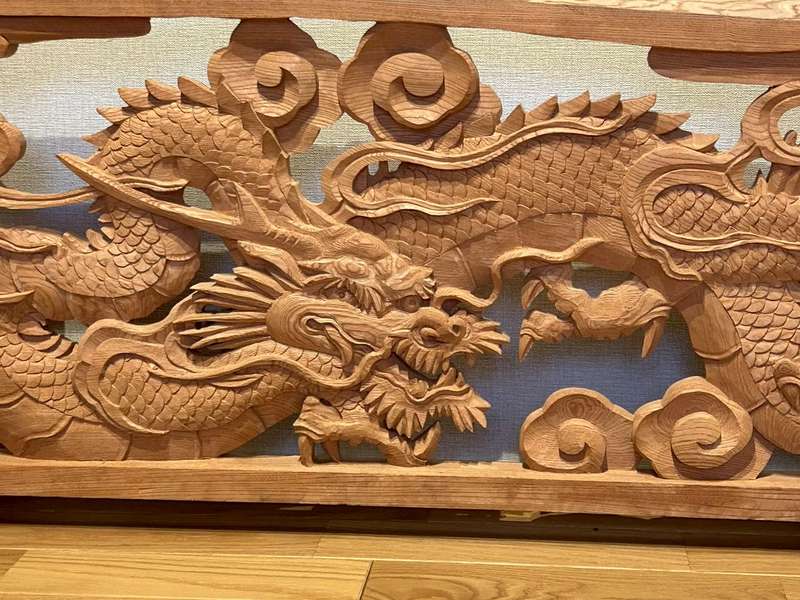 No.108Dragon ranma panel
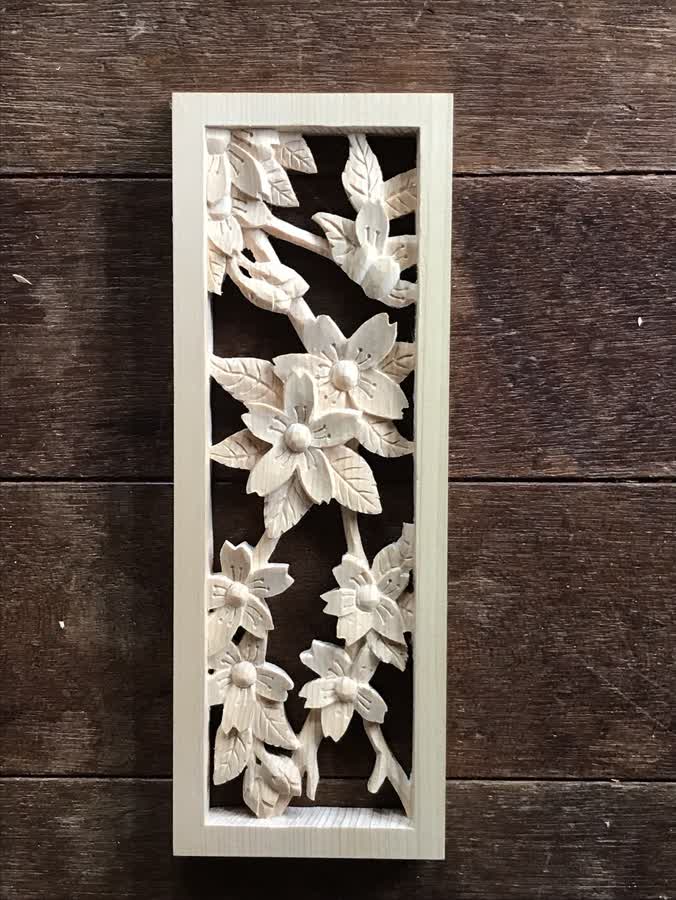 No.117Tall cherry blossom panel
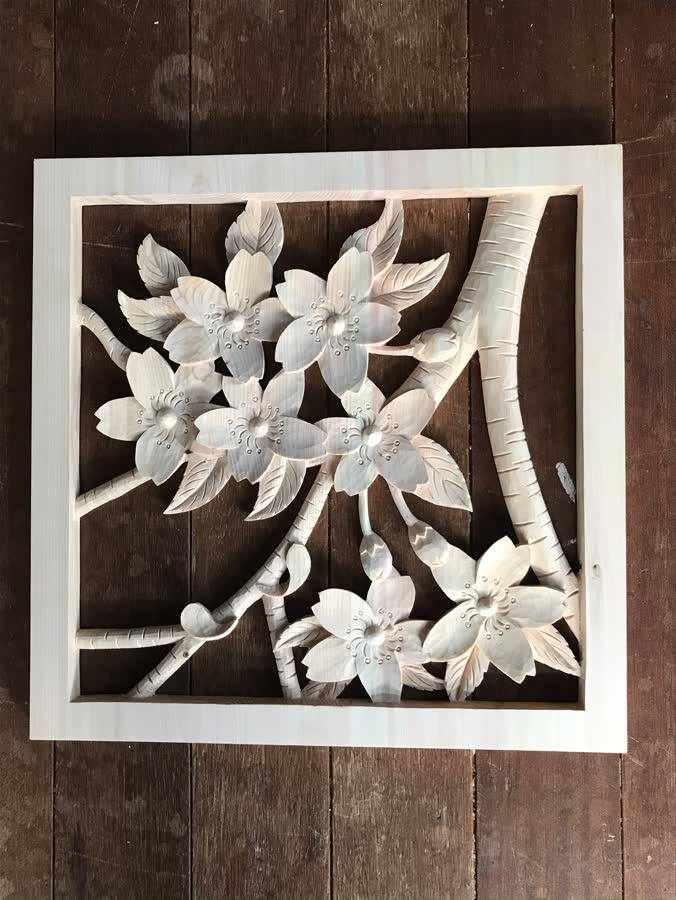 No.165Square cherry blossom panel
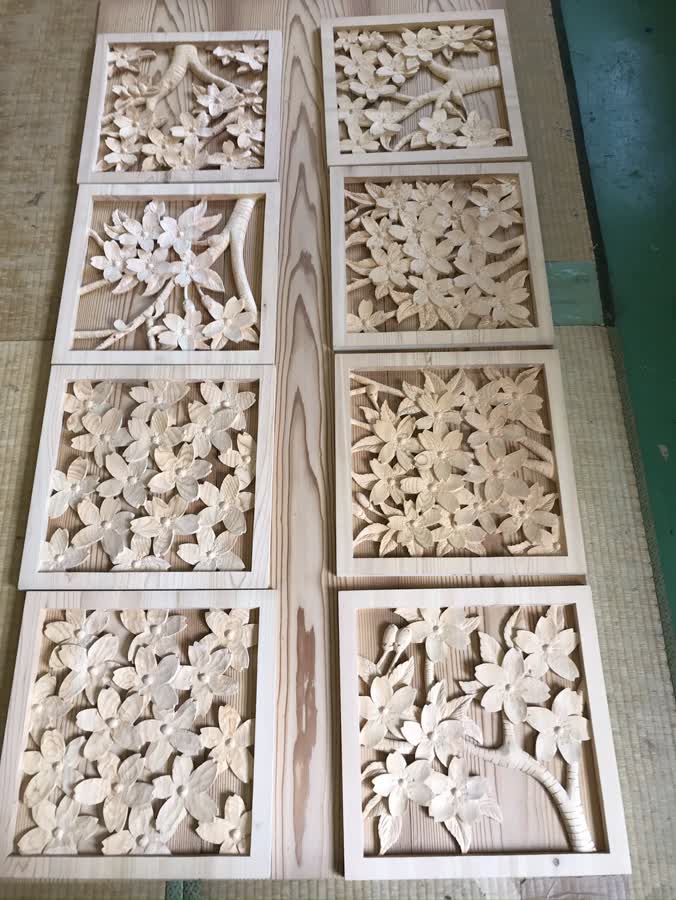 No.166Eight cherry blossom panels
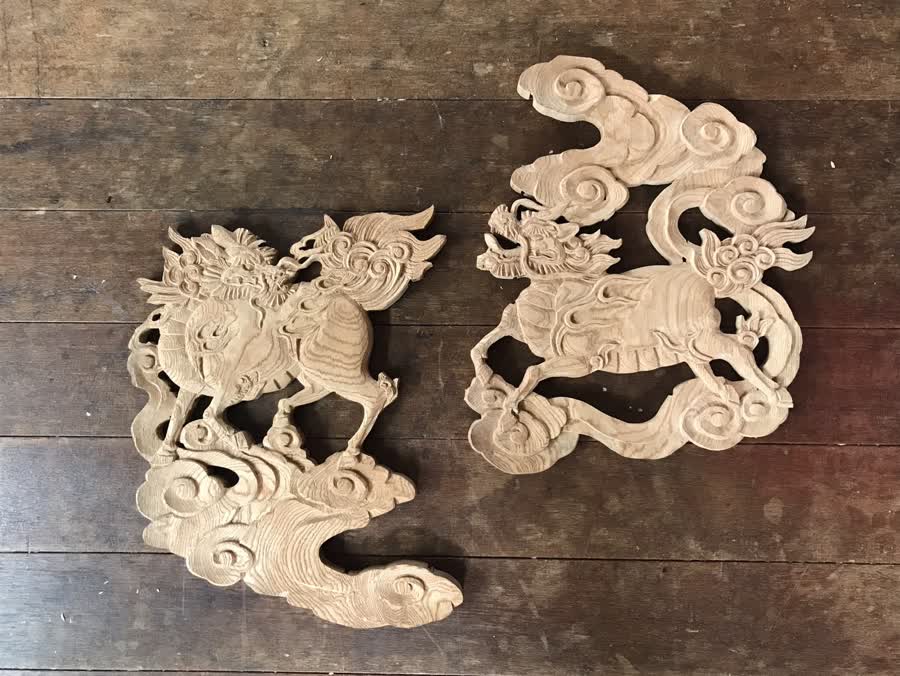 No.164Beasts among clouds
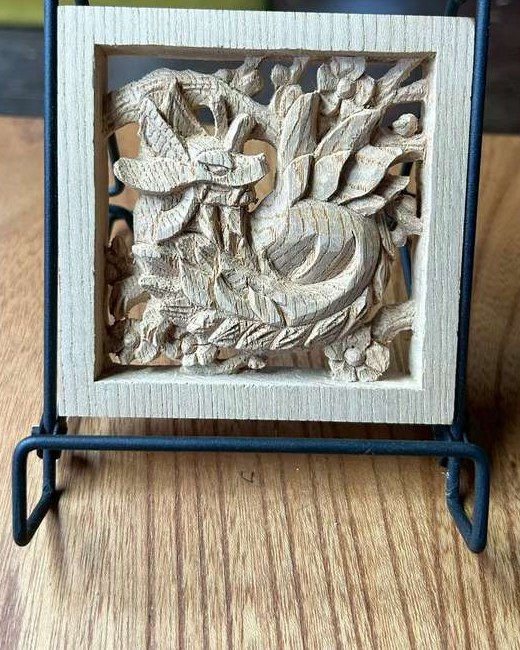 No.070Bird among flowers
Gallery works are not reproduced: a piece like one of these is carved new for you. Architects, designers and temples: see Trade.
Common questions
What is a ranma?
A ranma (欄間) is a carved panel set above the sliding doors of a Japanese room. We carve ranma in openwork (sukashi-bori: carving cut right through the board) or relief.
Who carves the ranma?
Kazushige Ijiri, the third generation of Ijiri Chokokusho, carves every piece by hand at the workshop in Maibara, Shiga, Japan, founded in 1935. Kazushige Ijiri is a certified Traditional Craftsman (dento kogeishi) for Hikone Butsudan, sculpture division, No. 507210, certified in 2013 by the Association for the Promotion of Traditional Craft Industries. Hikone Butsudan is a traditional craft designated by Japan’s Minister of Economy, Trade and Industry.
Can you make a ranma to fit my opening?
Yes. Send drawings or a photo of the wall with measurements. A new piece starts with a sketch drawn to your dimensions, and a quote. One piece can be up to about 200 × 100 cm.
How much does a ranma cost?
Each ranma is priced by size, wood and detail, and your quote sets the final total. As of 2026-11-23, Ijiri Chokokusho's provisional guide prices for carved wall panels, delivered to the US with shipping, insurance and import duties included, start at $650 for about 20 × 20 cm and $1,500 for about 30 × 40 cm; a large panel of about 200 × 100 cm is quoted individually. For other countries, your quote gives the total, and says so if import duties are paid on delivery.
Do you install the piece?
We can send a fixing diagram with the piece for your installer. On-site installation outside Japan can be discussed and quoted separately.
All guides · How to commission · Selected works
Published: 2026-11-24 · Last updated: 2026-11-24